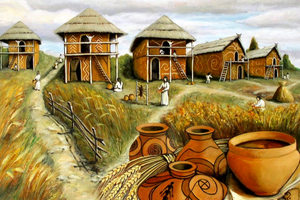
Endless fields of wheat and rye, orchards with apple blossoms, emerald forests, rivers and seas - the original landscapes of Ukraine. Pictures that evoke memories of childhood and youth for every Ukrainian. They give invisible joy from the realization that this is my native land, my roots are here.
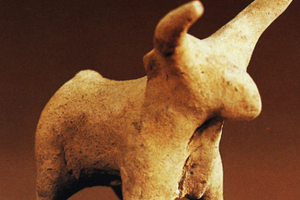
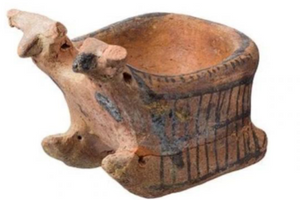
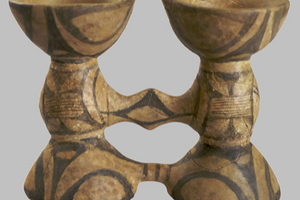
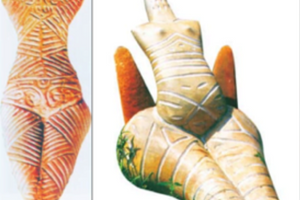
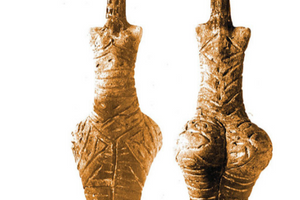
Archaeological findings show that the life of generations was based on natural cycles. The main symbols are the sun, water, fire, grain, and heredity (ancestral worship). The ancestors of Ukrainians thanked the forces of nature for their crops, livestock, and their own health and life. Their worldview was that everything around them has a certain energy, and if you live in peace and harmony with the world around you, you will have everything you need. That is why our ancestors never treated the gods (the embodiment of the elements and forces of nature) as slaves or servants, but rather as "companions" or "cohabitants." Each had its own zone of influence - the gods had a magical one, people had an earthly one. And together they maintained the balance of the world around them.
With the advent of Christianity, these manifestations became paganism, and polytheism was replaced by monotheism. Most of the symbols and traditions remained, although they have come down to us modified. Christian holidays began to be combined with the usual ones of that time, symbols were interpreted from the point of view of Christianity, and temples were built near Slavic temples. For example, how the text of a ritual song changed from pre-Christian times to the 20th century. (Ethnographers managed to find a pre-Christian version that was still sometimes sung in Ukrainian villages and compare it with newer versions.) This cosmogonic carol tells of the creation of the world: "Oh how it was from the beginning of the world". It sings the myth of the creation of the world by the three Blue Birds. Later in the story, the birds are replaced by angels, later by two brothers, and then by God and the Christian apostles Peter and Paul. The last known version is called "Oh, how it was from the beginning of time" and in it only the apostle Peter is involved in the creation of the world.
The echoes of the original sacred traditions of ancient Ukrainians still fill our lives today. Let's take a look at the ritual calendar of our Slavic ancestors. Why did they celebrate certain holidays, what energies filled each action, what symbols were used? Finally, we will find out how this knowledge is useful today.
Winter. A carol.
 The main symbol of the Slavs was the Sun. Solar signs can be found on the jewelry and household items of the Cimmerians, Scythians and Sarmatians, Trypillians and Slavs who lived in what is now Ukraine.
The Winter Solstice occurs between December 20 and 22 (the date may vary slightly). During these shortest days and longest nights, the ancestors of Ukrainians celebrated the birth of the new sun - Koliada. One of its symbols was the eight-pointed Star or Alatyr, which symbolized the newborn Sun. There is also an assumption that it is a combination of female and male energies in two crosses, one straight and one slanted. This element was depicted on Easter eggs, embroidered, carved, and applied to household items long before the princely era. With the advent of Christianity, the eight-pointed star began to be identified with the Star of Bethlehem, which announced the birth of Jesus. Thus, its symbolism of the beginning of a new cycle remained unchanged.
Another equally important symbol was Didukh, a sheaf made of various cereals, dried herbs, and ribbons. The time of its appearance is not known for certain, as images similar to Didukh are found on household items dating back thousands of years. It symbolized the well-being of the home, family health, and honored ancestors, and sometimes symbolized the first ancestor from whom the family originated.
Before the winter solstice, our ancestors performed rituals of renewal and purification. They thanked the spirits of nature for their unceasing support during the most difficult winter time. They expressed their gratitude in ritual songs - carols. Unfortunately, the oldest carols about the creation of the world and gratitude to the gods have not survived. But in the modern ones we see echoes and symbols of ancient beliefs, as well as glorification of God. The most famous ones today are "Good evening to you, master," "New joy has come," and "The eternal God is born." With the adoption of Christianity, the holidays were celebrated on December 24 - Christmas Eve and December 25 - Christmas itself. Carolers (boys or boys and girls, depending on the region) would gather in groups and go from house to house to sing carols and vinshiv (say greetings). They would also go out at different times-sometimes with the first star on December 24, sometimes in the morning on December 25.
 Starting in the 17th century, Verteps became popular in Ukraine. These are traveling puppet theaters. It should be noted that in Western Europe, these were mostly church productions, while in Ukraine, along with religious ones, secular plots were quite common.
In winter, Malanka was celebrated throughout modern Ukraine on New Year's Eve. It was a ritualistic performance designed to confuse evil spirits and drive them away from homes as far as possible, as well as to invoke prosperity and health for the entire year for each owner. Mixed groups of young people would gather on Malanka and "drive the Goat". They dressed up as different characters (each part of Ukraine had its own): grandfather, grandmother, Jew, Gypsy, goat, devil, wolf, doctor, etc. The merry group would act out scenes from the lives of grandparents, Jews, and gypsies, "milk the goat" so that the year would be full of prosperity, "kill the goat," and then the doctor would treat it or the grandfather would revive it by singing a ritual song. Ethnographers have a version that the grandfather is a prototype of a priest from ancient pagan times who ritually brought life back to the animal on a festive night. During malanka and "driving the goat," carols were sung. They usually praise the owner and his family, invoke prosperity. And the hosts, in turn, treat the carolers. Long before Christianity, carols were used to celebrate the new year, calling for spring and the flowering of nature. That is why the world-famous "Shchedryk" sings about a swallow as a symbol of nature's awakening.
Kutia was an important sacred attribute of the winter holidays. It is believed that it was originally a ritual memorial dish made from various cereals, nuts, honey, dried berries, and poppy seeds. Later, it came into use during the New Year holidays, where it also symbolized the unity of the family and the memory of ancestors. On Christmas Eve, "hungry kutia" was served, preceded by fasting, and on the generous evening of the New Year's Eve, "generous kutia" was prepared. There are studies that prove that fasting was not only a Christian phenomenon. In the days of paganism, our ancestors also fasted on the eve of important holidays to purify their minds and bodies.
The cycle of winter New Year's holidays ended on Vodokres ("kres" means fire, light, purification). On this day, the water acquired "light," became healing, and completed Koliada, the birth of the new sun. It was celebrated between January 6 and 9.
Spring. Equinox
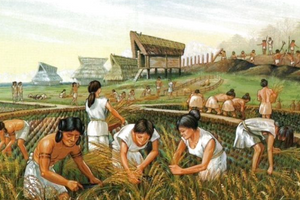
In the spring, nature awakens, and our ancestors had rituals and songs to accompany the preparation for the start of field work, so that the harvest would be bountiful and the cattle healthy. They would bake small birds from flour and give them to children. The children ran with them, had fun, sang and called the real birds to come home after the winter.
 The day of Yaril was significant as the embodiment of the sun, which gained its vitality and power. He was honored on the days of the spring equinox. It was around this time that Easter was celebrated, that is, the "great day," when the day gradually became longer than the night. This is the period of awakening of nature and the earth. The symbols were eggs (pysanky), as a symbol of the origin of life and the universe. Rabbits and hares, which also symbolized new life, as they reproduce very quickly in nature. The green tree is a symbol of the rebirth of nature. As you can see, our ancestors did not invent anything extraordinary, they observed life around them, thanked for the harvest and contributed in every way to the emergence of new things and intuitively chose symbols for each season. In Ukrainian, we still call the Christian holiday of Easter Easter and paint eggs with ancient symbols that are filled with the faith of our ancestors.
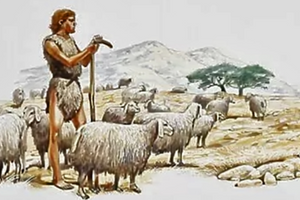
In spring, in addition to Yarylo, farmers and shepherds honored Veles, the god of livestock, wild animals, trade, prosperity, and art. Veles was also associated with the boundary between the world of the living and the dead, but we will talk about this side of him later.
Where there is a farm, there have always been blacksmiths and fire. At the spring equinox, people did not forget about Svarog, the god of the sky, fire, and blacksmithing. The blacksmith's profession was considered quite honorable, and blacksmiths were considered semi-magicians, because how can an ordinary person "conjure fire" and turn iron into many useful things in the household.
Summer. Bathing
The sun reaches its highest power in June on the Summer Solstice. Herbs and flowers are filled with power, animals have plenty of food. Kupalo or Kupailo is the embodiment of the summer sun and the period when all the elements reached their peak, their heyday. Dazhboh, the god of the sun and prosperity, was also the patron saint of this time of year. And Lada, the goddess of love and fertility, mutual love and harmony between a woman and a man.
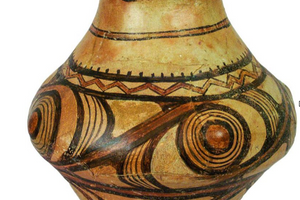
 Our Slavic ancestors gathered in large forest glades, near rivers and lakes, and celebrated life. They sang ritual songs about harvest, marriage, and love. Girls would weave wreaths and let them float on water to find out where to expect their future husbands. Older women gathered herbs and flowers on the festive night, which they would use to heal their families and protect their homes from evil forces throughout the year. Everywhere they would burn bonfires and jump over them, thus burning away diseases and all kinds of misfortunes. The main symbols during this period were the elements of nature, a wreath as an embodiment of cyclicality, the infinity of life, and the fern flower. There are many legends associated with the fern and each region has its own secrets on how to find it. The main image it embodies is the search for inner strength through overcoming fear (traveling through a dense forest in the dark night) and discovering "treasures" that are deeply hidden in our subconscious. Archaeologists have been finding images of the wreath circle since the time of Trypillians. With the advent of Christianity, the holiday was called Ivan Kupala, but most of the traditions have remained unchanged since ancient times.
At the end of July, we honored Perun, the supreme god of the sky and lord of lightning. Our ancestors asked the sky to be kind and send life-giving rains without killing lightning.
Woodmen, watermen, fieldmen, mermaids, and housekeepers are a small list of creatures that "inhabited" the world alongside people. These were people's attempts to explain certain natural phenomena through the prism of human life. Perhaps that is why our ancestors were more respectful of the world around them, because they saw manifestations of life in everything?
Autumn. The harvest festival. The cult of ancestors


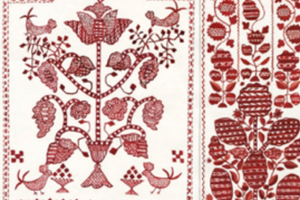
 Preparations for the fall began during the harvest. It was then that the sheaf for the future Didukh was prepared. The goddess Makosha or Makosh, the patroness of women's destiny, motherhood, children, the hearth, and needlework, was honored. During the autumnal Equinox, the Harvest Festival was celebrated. People decorated their homes and yards, thanked the land and the gods for a bountiful harvest. The symbols of the autumn holidays were ears of cereals, a spinning wheel as the personification of the sun and endless movement, fire, and Rozhanitsy, the guardian of the home and human destiny. Similar goddesses of fate are found in many nations around the world. All of these graphic symbols of the forces of nature are embroidered on towels, shirts, and painted on clay products by contemporary craftsmen and women. And of course, they are used in jewelry. In the fall, Christians celebrate the Three Holy Days, which are dedicated to the Virgin Mary and her work on earth.
The special sacred meaning of the autumn holidays was in the commemoration of ancestors. The cult of the ancestors has been known to researchers for thousands of years in the history of the peoples living on the territory of Ukraine. In addition to honoring the gods, ancestors were honored all year round on important holidays. But this cult reached its peak in the fall, when the days became shorter and the nights longer. Nature gradually "died" in preparation for the long winter. The boundary between the world of the living and the dead was becoming extremely thin. It was time to turn to Veles, who guarded the boundary of the worlds and helped souls fly away to the ire. In honor of the ancestors, memorial dinners were organized, gifts were brought in the form of fruits, berries, honey and left in the field, forest or near water bodies.
As we mentioned in the chapter on winter holidays, Didukh, a sheaf of ears was the personification of ancestors, the personification of the Rod, also an ancient Slavic deity.
Ancient traditions and modern rhythm of life
In our tumultuous world, it's time to remember the superpower of all Ukrainians - the ability to observe and adjust their own rhythms in unison with nature. Create new habits and traditions. Take a break in a park or forest at least once a week. Watch the movement of water and clouds, light a fire (of course, safely). In the spring, update your wardrobe, rearrange your home or revise your "dreams, plans and goals." In the summer, spend as much time as possible outdoors - recharging with solar energy, even if it's just a lunch break. Invite family and friends to your cozy home, thank each other, flip through albums with family photos, and light candles for comfort. Always tell the younger generation about their ancestors and family traditions. And remember that everything around you has a certain energy and if you live in peace and harmony with the world around you, you will have everything you need.
Prepared by Olena Koval
Sources used
Oleksa Voropay, "The Customs of Our People," volume 1, Munich 1958, 308 pp.
Oh, how else was it with the descendants of the world
Oh, how it has been since the beginning of time
Photo/picture references: all images are from Pinterest.